

Minnesota homeowners face a year-round HVAC Indoor Air Quality (IAQ) challenge unlike most of the country. Winters drop indoor relative humidity to 10–20%, drying out sinuses, skin, and wood floors. Summers push basement moisture toward mold-friendly levels. Tightly sealed, energy-efficient homes trap CO₂, volatile organic compounds (VOCs), and allergens with no natural relief. Between January and May 2026, we evaluated seven categories of whole-home IAQ add-ons on five weighted factors to determine which ones deliver the most value for Minnesota homeowners. While every home is different, these rankings are based on the issues Blue Ox technicians encounter most frequently in Minneapolis-area homes, including winter dryness, excess summer humidity, pet dander, seasonal allergies, stale indoor air, and indoor air quality concerns related to tightly sealed modern construction. Blue Ox Heating & Air evaluates indoor air quality using a five-factor scoring framework that weighs impact, cost, climate relevance, maintenance, and seasonal usefulness, applied consistently across every add-on category in this guide.
How We Scored Each Add-On
- IAQ Impact (30%): How measurably and broadly does this add-on improve indoor air quality?
- Cost Value (25%): What does a homeowner receive relative to the installed cost?
- Minnesota Climate Relevance (20%): How directly does this add-on address the specific challenges of Minnesota’s climate?
- Maintenance Ease (15%): How much ongoing effort does ownership require?
- Year-Round Usefulness (10%): Does this add-on provide benefit across all four seasons, or primarily in one?
Our rankings are based on real-world homeowner outcomes, manufacturer performance data, maintenance requirements, and the unique climate challenges faced by Minnesota homeowners. Those five factors combine into a single overall weighted score for each add-on. The table below shows that score alongside installed cost and four plain-language attributes. Full reviews follow.
The Best HVAC Add-Ons for Indoor Air Quality: 2026 Rankings
| Rank | Add-On | Overall Score (out of 10) | Installed Cost | Best Problem It Solves | Maintenance | Best For |
|---|---|---|---|---|---|---|
| 1 | Whole-Home Humidifier | 9.0 | $400–$1,500 | Dry winter air, static electricity, cracked woodwork | Low: annual water panel or pad replacement | Most Minnesota homes, especially built before 2000 |
| 2 | HRV/ERV Air Exchanger | 8.7 | $1,200–$3,500 | Stale air, CO₂ buildup, chemical off-gassing in tight homes | Low: filter cleaning 2x/year | Newer or well-sealed homes |
| 3 | Whole-Home Air Purifier | 8.4 | $600–$2,000 | Allergens, dust, pet dander, fine particles | Low to moderate: wash or replace filter every 1–3 months | Allergy and asthma households; pet owners |
| 4 | UV Germicidal Light | 8.2 | $200–$700 | Mold growth on evaporator coil; airborne bacteria and viruses | Low: annual bulb replacement | Homes with a history of mold; respiratory sensitivities |
| 5 | High-Efficiency Media Filter | 7.9 | $30–$80/year (filter); $200–$600 (cabinet upgrade) | Dust, pollen, basic airborne particles | Easy: replace 1–2x/year | Budget-first starting point for any home |
| 6 | Whole-Home Dehumidifier | 7.5 | $1,300–$2,800 | Summer humidity, basement condensation, musty odors | Low: auto-drain or annual drain check | Homes with humid basements or crawl spaces |
| 7 | Duct Cleaning | 6.8 | $350–$700 per service | Accumulated debris, post-renovation dust in ductwork | None ongoing: every 3–5 years as needed | Older homes; post-renovation; resale buyers |
Installed cost ranges reflect Minneapolis-area contractor pricing as of 2026. Actual cost depends on home size, existing ductwork, and equipment brand. Blue Ox Heating & Air provides upfront pricing before any work begins.
1. Whole-Home Humidifier, the most impactful IAQ investment for most Minnesota homes
No single HVAC add-on delivers more relief per dollar for a Minnesota homeowner than a whole-home humidifier. When a gas furnace runs through a Minnesota winter, it heats and circulates air without adding any moisture, pulling indoor relative humidity (RH) down to levels that cause chapped lips, nosebleeds, static electricity, and cracked hardwood floors, making it easier to catch colds and respiratory infections. The EPA recommends keeping indoor RH between 30% and 50%. In Minnesota homes, maintaining proper humidity levels can also help reduce static shocks, improve sleep comfort, protect wood furniture and flooring, and reduce irritation caused by dry winter air. Without a humidifier, many Minnesota homes experience indoor relative humidity levels as low as 15–25% from November through March.
A whole-home humidifier connects directly to your HVAC system and adds controlled moisture to every room through existing ductwork. Bypass models ($400–$800 installed) use furnace airflow to evaporate water from a rotating drum or pad. Fan-powered models ($700–$1,500 installed) include their own fan and work even when the furnace blower is not running, making them better for homes that maintain lower heating set-points or use zoning systems. Steam humidifiers are the most precise option and are typically reserved for larger or medically sensitive households ($1,200–$2,000+ installed). Annual maintenance involves replacing the water panel or evaporator pad, a task that takes most homeowners under 30 minutes, or roughly 15 minutes during a maintenance visit.
Installed Cost: $400–$1,500 (bypass or fan-powered); $1,200–$2,000+ (steam)
Annual Maintenance Cost: $20–$50 (water panel replacement)
When You Need It: If your home’s RH drops below 30% in winter, or if you notice static electricity, frequent nosebleeds, or wood floors shrinking at the seams
2. HRV/ERV Air Exchanger, for homes where the air itself is the problem
An energy recovery ventilator (ERV) or heat recovery ventilator (HRV) does something no filter, purifier, or humidifier can: it replaces stale indoor air with fresh outdoor air without wasting the energy used to condition it. Both systems continuously cycle a small percentage of indoor air to the outside while drawing fresh air in, running both airstreams through a heat-exchange core that transfers temperature (HRV) or both temperature and humidity (ERV) between the two.
The distinction matters in Minnesota. An HRV transfers heat only, making it the right choice for most Minnesota homes in winter because it exhausts excess moisture along with stale air; even in a home dry enough to need a humidifier, moisture still concentrates around windows, bathrooms, and kitchens, where it shows up as winter condensation and fogged glass. An ERV transfers both heat and humidity, which is better for homes that are persistently dry. Tight, energy-efficient homes are the best candidates. Many newer Minneapolis homes are built significantly tighter than homes constructed before 2000. While this improves energy efficiency, it can also trap odors, cooking byproducts, VOCs from furnishings, and elevated carbon dioxide levels indoors. Homes built after 2000, homes that have been professionally air-sealed, and homes where residents notice persistent headaches, drowsiness, or a lingering stale smell are all strong candidates. CO₂ concentration above 1,000 ppm, measurable with a basic indoor air monitor, typically confirms your home isn’t getting enough fresh air. Some utility providers may offer rebates for qualifying HRV/ERV installations, depending on location and program availability.
Installed Cost: $1,200–$3,500
Annual Maintenance Cost: $20–$40 (filter cleaning or replacement)
When You Need It: If your home is well-sealed, if occupants experience headaches or fatigue that improve when windows are opened, or if CO₂ readings consistently exceed 1,000 ppm.
3. Whole-Home Air Purifier, for households with allergens, pets, or fine particle concerns
A whole-home air purifier integrates into your HVAC system’s return air duct and cleans the air every time the blower runs, filtering every cubic foot of air in the home multiple times per day. Many homeowners assume portable air purifiers provide the same benefit. However, portable units only treat the air in a single room, while a whole-home air purifier treats air throughout the entire home whenever the HVAC system operates.
Whole-home air purifiers come in two types: Electronic air cleaners charge incoming particles and collect them on an oppositely charged collector plate, capturing small particles, including many viruses. The collector plate needs washing every one to three months, which takes about 10 minutes under a running faucet. Media air cleaners use a thick, densely pleated MERV 11–16 filter to physically trap particles; they require no electricity beyond the blower motor but need filter replacement once or twice a year. High-end combination systems, such as the Lennox PureAir, add activated carbon for odor and gas removal on top of particle filtration. For many allergy and asthma households, an electronic air cleaner in the $700–$1,000 installed range can deliver significant benefits.
Installed Cost: $600–$2,000
Annual Maintenance Cost: $0–$100 (electronic: free to clean; media: filter replacement)
When You Need It: If household members have allergies, asthma, or respiratory sensitivities; if you have pets; or if surfaces dust up visibly within days of cleaning.
4. UV Germicidal Light, for homes with mold risk or biological IAQ concerns
A UV germicidal light installs inside your HVAC system, typically near the evaporator coil, and continuously emits ultraviolet-C (UV-C) light. UV-C radiation damages the DNA of mold spores, bacteria, and viruses, preventing them from reproducing. The primary target is the evaporator coil itself: because the coil is cold and wet, it is the most mold-prone surface in any forced-air system. A coil-mounted UV light keeps the surface clean without chemical treatment, and prevents the biofilm buildup that reduces how well your system transfers heat.
UV germicidal lights are a targeted tool, not a comprehensive IAQ solution. They are highly effective against biological contaminants but do not remove particles, control humidity, or improve ventilation. Because UV systems address biological contaminants rather than airborne particles, they typically deliver the best results when paired with filtration or ventilation improvements. Their highest value is as a complement to other add-ons, particularly alongside an air purifier or after a duct cleaning. Installation is among the least disruptive of any IAQ add-on: a technician mounts the lamp in the air handler cabinet, connects it to a power source, and the system is operational the same day.
Installed Cost: $200–$700
Annual Maintenance Cost: $30–$80 (UV bulb replacement)
When You Need It: If your evaporator coil has shown mold growth during past maintenance visits; if household members have immune sensitivities; or as a complement to a whole-home air purifier
5. High-Efficiency Media Filter, the right starting point before investing in anything else
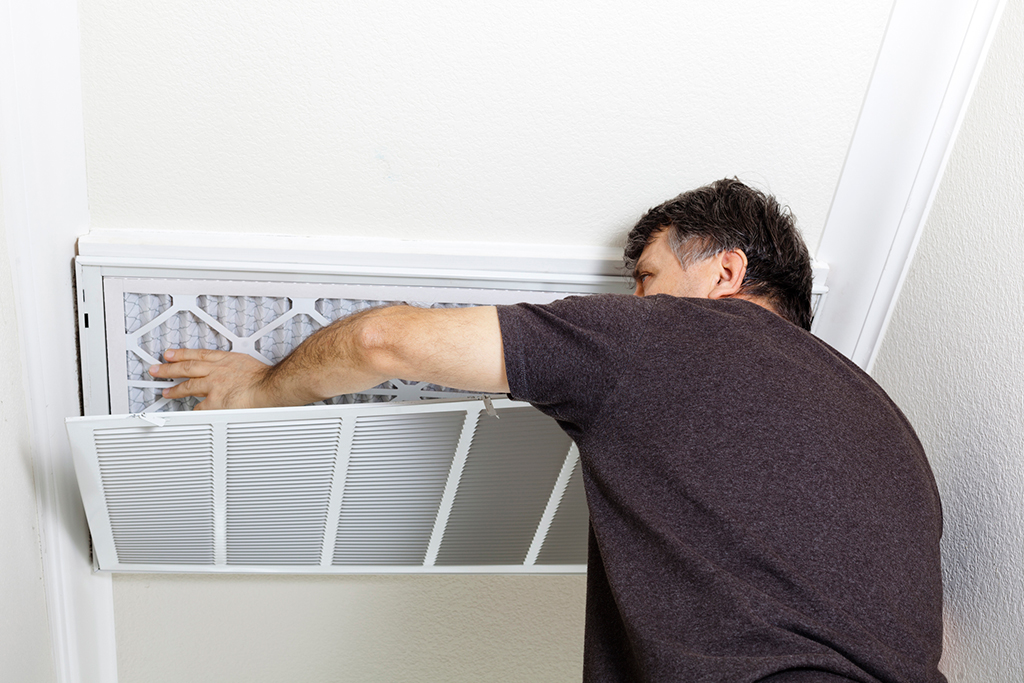
Before adding any powered IAQ equipment, upgrading your existing HVAC filter is the simplest and most cost-effective first step. Standard fiberglass filters (MERV 1–4) capture large debris to protect the blower motor. They do almost nothing for air quality. A MERV 11–13 pleated media filter captures the vast majority of pollen, pet dander, mold spores, and fine dust at a cost of $30–$80 per filter, replaced one to two times per year.
The upgrade works entirely passively: no installation beyond swapping the filter. For most homeowners, this is the first IAQ action worth taking because it costs almost nothing and creates a clean baseline before measuring whether further equipment is needed. Before upgrading to higher-MERV filtration, homeowners should verify their HVAC system is designed to accommodate the additional airflow resistance. Improper filter selection can reduce system performance and efficiency. A media filter addresses particles only: it does not correct humidity, ventilation, or biological contamination. It is a starting point, not an endpoint.
Whole-home media cabinets, installed in-line with the return duct, hold a thick 4–5 inch filter that lasts 6–12 months compared to 1–3 months for a standard 1-inch slot filter, and provide meaningfully better performance ($200–$600 installed).
Installed Cost: $30–$80 per filter (drop-in); $200–$600 (whole-home media cabinet)
Annual Maintenance Cost: $30–$160 (1–2 filter replacements per year)
When You Need It: As a first step for any home currently using fiberglass or low-MERV filters; before investing in any powered IAQ equipment
6. Whole-Home Dehumidifier, for basements and summer humidity problems
A whole-home dehumidifier installs in-line with your HVAC system or standalone in a basement and removes excess moisture before it enters living areas. Minnesota summers produce enough moisture to push basement RH above 60%, the threshold at which mold growth accelerates. Homes with poured concrete basements, crawl spaces, or basement bedrooms are the most common candidates. Homes with finished basements, basement bedrooms, exercise rooms, or home offices often experience the greatest benefit from whole-home dehumidification systems.
Unlike a portable room dehumidifier, a whole-home unit connects to a floor drain or condensate line for automatic water removal, so it operates continuously without manual emptying. It integrates with a whole-home humidistat, running only when RH measurements indicate it is needed. The seasonal limitation is the primary reason this add-on ranks below the top four despite addressing a genuine Minnesota problem: a whole-home dehumidifier provides almost no benefit from October through April, when wintertime heating naturally dries the air. For homes where summer humidity is a documented problem, causing musty smells, condensation on pipes or windows, or visible mold growth in warmer months, the investment is well-justified.
Installed Cost: $1,300–$2,800
Annual Maintenance Cost: $50–$100 (annual service, drain inspection)
When You Need It: If indoor RH exceeds 55–60% in summer; if you notice musty odors, condensation on basement walls, or mold in warmer months
7. Duct Cleaning, a one-time reset rather than an ongoing add-on
Duct cleaning is not a system installation: it is a periodic service that removes accumulated dust, pet dander, mold spores, and post-construction debris from inside your ductwork and air handler. It does not improve IAQ on an ongoing basis the way the six add-ons above do. What it does is reset a dirty system to a clean baseline, which matters in specific circumstances. The clearest cases for duct cleaning are: a home more than 10–15 years old that has never had ductwork cleaned; a home where major renovation work was completed without isolating the HVAC system; a home with evidence of rodent or pest activity in ductwork; and a home where a new owner wants to start fresh after purchase. Routine duct cleaning is generally not recommended unless one of these conditions is met.
A professional cleaning uses truck-mounted or portable negative-pressure equipment to dislodge and capture debris from every register, the main trunk lines, the air handler, and the evaporator coil.Homeowners should be cautious of heavily discounted duct cleaning promotions. Comprehensive duct cleaning requires specialized equipment, trained technicians, and several hours of labor to properly clean the entire system. In the Minneapolis area, the cost for an average single-family home runs $350–$700 per service. Quotes significantly below $200 typically mean the technician is vacuuming at the registers only, not cleaning the full duct system.
Service Cost: $350–$700 (average Minneapolis home)
Frequency: Every 3–5 years as needed, or after specific triggering events
When You Need It: After major renovation; at first move-in of a resale home; if visible debris or mold is present in registers; or if occupants notice a sudden increase in dust when the HVAC runs
The Best IAQ Add-Ons for Allergy Households
A tight home traps stale air with no natural way out. The HRV/ERV addresses the root cause, with particle control and humidity management following behind it:
- Whole-Home Air Purifier
- High-Efficiency Media Filter
- UV Germicidal Light
- HRV/ERV Air Exchanger
- Duct Cleaning
The Best IAQ Add-Ons for Tight and New Construction Homes
Older homes leak air but hold almost no moisture, and their ductwork often carries decades of debris. The humidifier addresses the most immediate and pervasive problem; duct cleaning and a filter upgrade follow before moving to more advanced equipment:
- HRV/ERV Air Exchanger
- Whole-Home Air Purifier
- Whole-Home Humidifier
- UV Germicidal Light
- High-Efficiency Media Filter
The Most Common IAQ Upgrade Combinations
For Dry Winter Air
- Whole-Home Humidifier
- High-Efficiency Media Filter
For Allergy Sufferers
- Whole-Home Air Purifier
- High-Efficiency Media Filter
- UV Germicidal Light
For New Construction Homes
- HRV/ERV Air Exchanger
- Whole-Home Air Purifier
For Finished Basements
- Whole-Home Dehumidifier
- UV Germicidal Light
Quick Reference: Match Your Problem to the Right Solution
| Problem | Best Solution |
|---|---|
| Dry air | Whole-Home Humidifier |
| Allergies | Whole-Home Air Purifier |
| Dust | Media Filter |
| Stale air | HRV/ERV |
| Mold concerns | UV Light |
| Humid basement | Whole-Home Dehumidifier |
| Recently renovated home | Duct Cleaning |
Which IAQ Add-On Is Right for Your Home?
No single add-on is the right answer for every household. The best indoor air quality improvements begin with identifying the actual problem. Dry winter air, excess humidity, allergies, stale indoor air, and dust issues often require different solutions. In many cases, the most effective approach involves combining multiple IAQ upgrades that work together to improve comfort, health, and HVAC performance.
A professional indoor air quality assessment can help determine which improvements will provide the greatest benefit for your home and budget.